People head out to the vineyard before dawn. Baskets, pruning knives, a jug of water and something to eat… The bunches must be cut before the heat sets in; around noon everyone rests in the shade of the vines, and work resumes in the cool of the afternoon. In Tur Abdin, the grape harvest is less a working day marked on the calendar than a gathering the whole family, often the whole village, looks forward to. Neighbours help in one another’s vineyards, children carry the baskets, and the elders sit in the shade sorting the bunches.
- Local grape varieties
- 22
- Harvest season
- July – mid-October
- Most common product
- Grape molasses
- Share of Mardin’s vineyards
- One third
The bounty of barren slopes
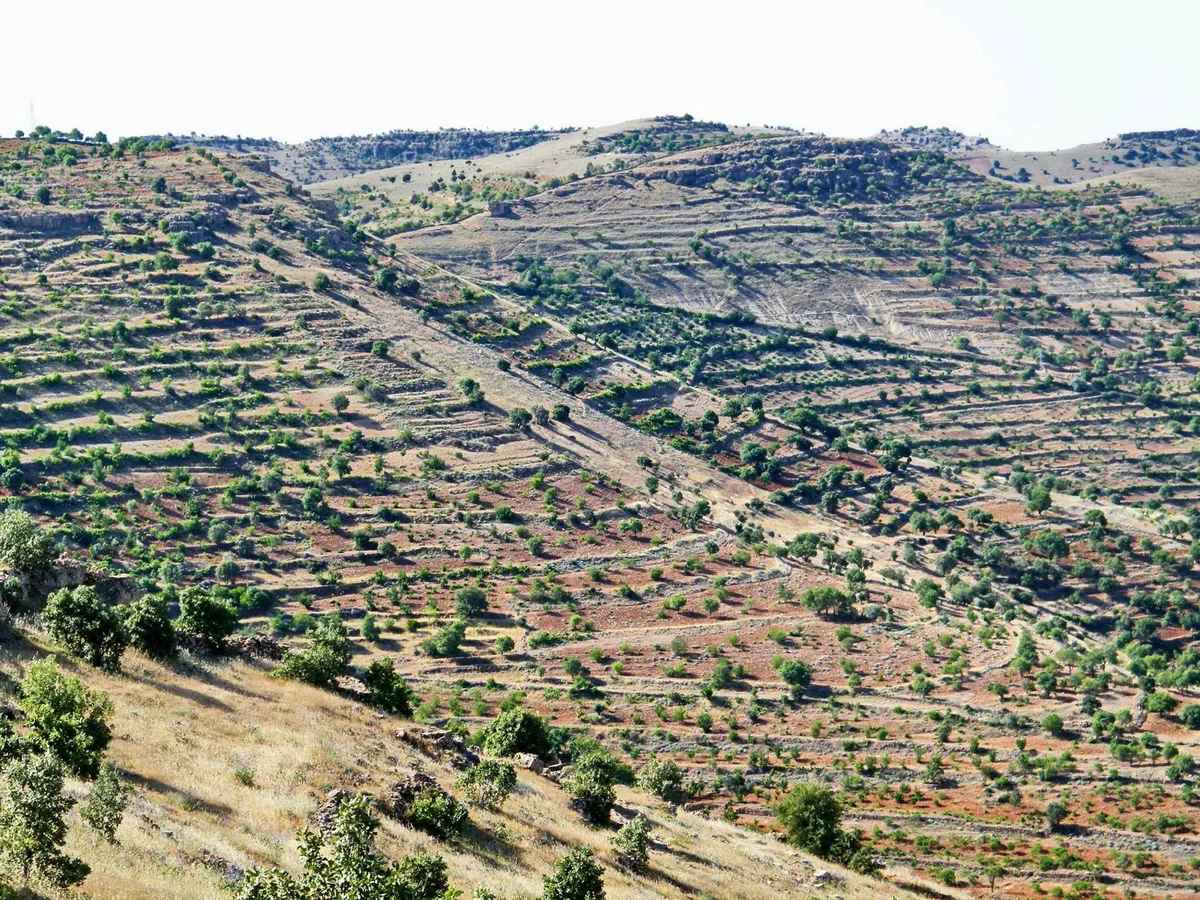
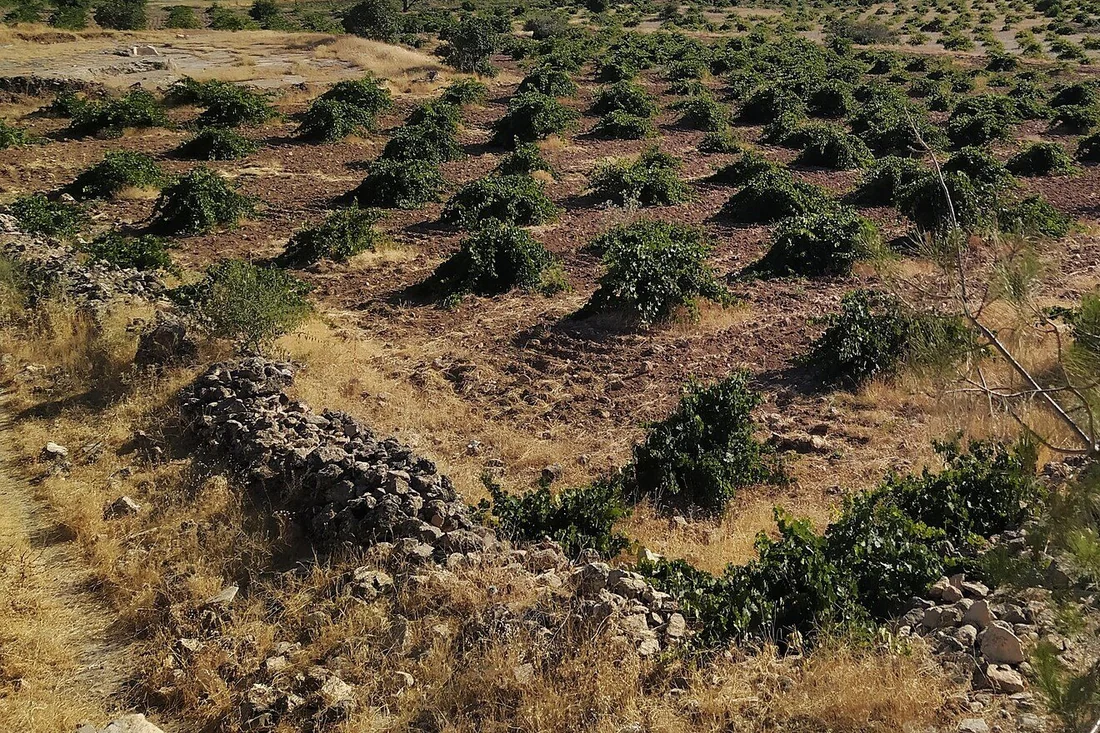
Midyat sits on the limestone plateau of Upper Mesopotamia, a land crossed by many civilisations, from the Sumerians and Assyrians to the Romans and Abbasids. Here, irrigated land is kept for gardens and vegetables, while vines are planted on dry, stony slopes. Thanks to the vine’s deep roots, these barren lands where little else can grow become fruitful vineyards. Dry-stone terraces built stone by stone along the slopes hold the soil in place and mark the edge of each vineyard.
The tradition remains strong today. According to official figures, Midyat alone holds more than a third of Mardin’s vineyards, with roughly 122,000 decares (about 12,000 hectares), and ranks first in the province’s grape production. Most vineyards are small family plots: the grapes are first set aside for the household, and the surplus goes to the district markets.
Twenty-two varieties, twenty-two names
A field study carried out in Midyat identified 22 local grape varieties in the area. Their names can change from village to village, even from family to family: Mazrona, Kerküş, Zeyti, Benitaht, Zeynebi (locally also called Lıbdrej), Reşek, Tayfi, Deyvani, Hazirani, Bakari, Belbezik… Each has its own place in the vineyard and its own purpose.
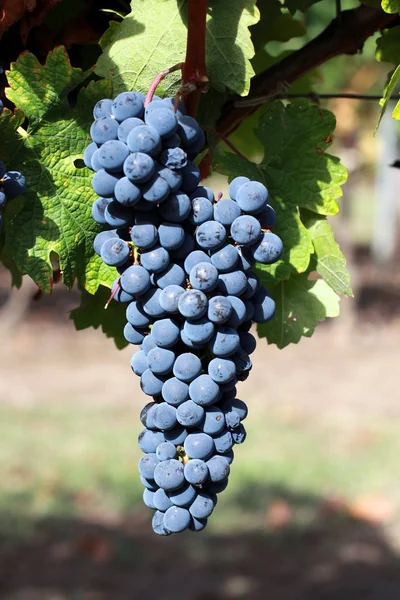
Zeyti, Tayfi and Deyvani are among the varieties most often eaten fresh at the table. Zeynebi, Kerküş and Belbezik are set aside for drying. Mazrona, with its thin skin that looks almost transparent against the light, goes both to the table and to the press for juice, and it is the favourite grape for fruit leather. Imsebek ripens in early July, Deyvani in late August and Mazrona in autumn. This is why the harvest is not a single day but a whole season stretching from July to mid-October.
The grape decides when to harvest
It is the grape, not the calendar, that decides when a vineyard is harvested. Growers still judge this with their senses rather than instruments: they taste a berry and look at the colour of the skin and the stem of the bunch. If the berry is not sweet enough, they say “one more week” and wait. This knowledge is not written in books; it passes from grandfather to grandchild through years spent among the vines.
The harvest is the moment when a whole year’s work fits into baskets in a single day.
A day at the vineyard house
The cut grapes are carried to the vineyard house beside the vineyard. The bunches are pressed in cloth bags and the juice that runs out is collected in a stone basin called the mahser. From there it is strained into large cauldrons. To clarify the juice and take away its sourness, one or two ladles of white, chalky earth are stirred into the cauldron, and then the fire is lit. As the juice boils, dark foam rises to the surface first, then white foam. The moment the white foam appears, the cauldron is taken off the fire and the juice is left to settle. This clear juice is the starting point of everything that will reach the winter table.
From molasses to kesme: the winter table
Grape molasses (pekmez) is the region’s most common product. The clarified juice is boiled for hours in wide pans called teşt and stirred as it thickens. One small detail sets Midyat’s molasses apart: while it boils, branches of mahaleb cherry or spurge are placed in it, giving the molasses a fragrance of its own. In the last days of the harvest, the molasses left in the pans is boiled a little longer into a very thick, jelly-like molasses called akit. Some households also add unripe figs to the molasses to make fig preserve.
Havdel is made by boiling the juice with flour until it thickens; a pinch of salt balances the taste, a little milk lightens the colour, and sometimes sesame is added. Fruit leather, kesme and sucuk are all made from this havdel.
For fruit leather (pestil), the hot havdel is spread thinly over white sheets and left to dry in the sun. Once dry, the back of the sheet is moistened, the leather is peeled off, dusted with flour and folded into triangles or squares for storage. For kesme, walnuts and almonds are mixed into the havdel and poured into trays; once dry, it is cut into diamonds like baklava. For walnut sucuk, fresh walnuts are threaded onto string, dipped into the havdel two or three times and hung to dry for a few days. A plain sucuk made with mahaleb branches instead of walnuts is also a local speciality.
Grapes drying on the rooftops
During the harvest season, Midyat’s flat roofs, courtyards and vineyards are covered with drying grapes. The bunches are first dipped briefly into boiling water; in the past, sifted wood ash was added to this water, while today a little soda and olive oil are usually used. This keeps the colour of the berries and speeds up drying. Spread out on the roofs, the bunches are turned over a few times and dry within ten to fifteen days. Roughly four kilos of fresh grapes give one kilo of raisins.
Gathering at the table
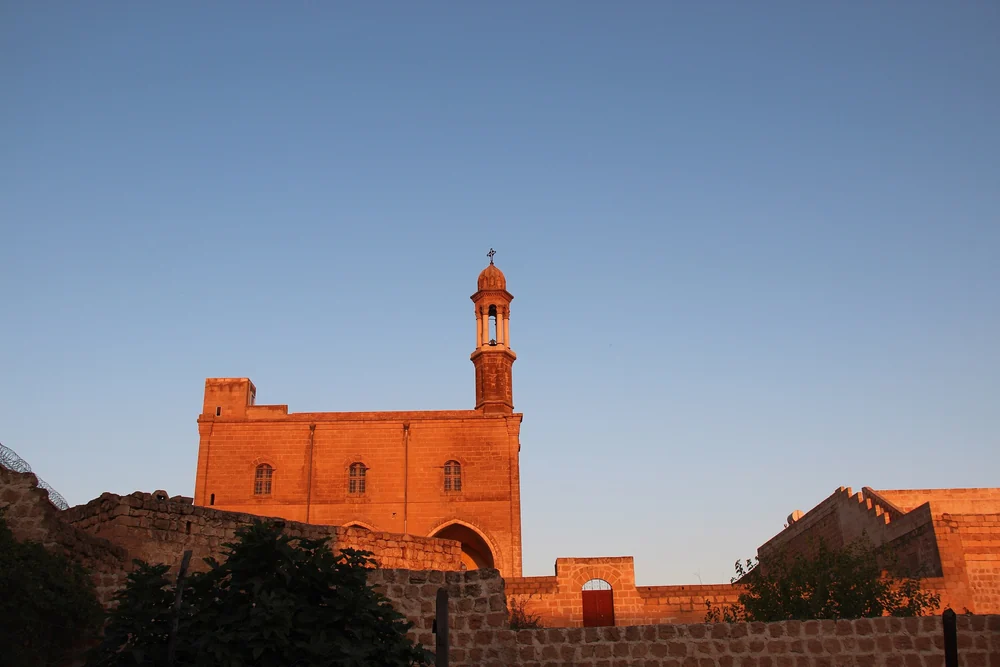
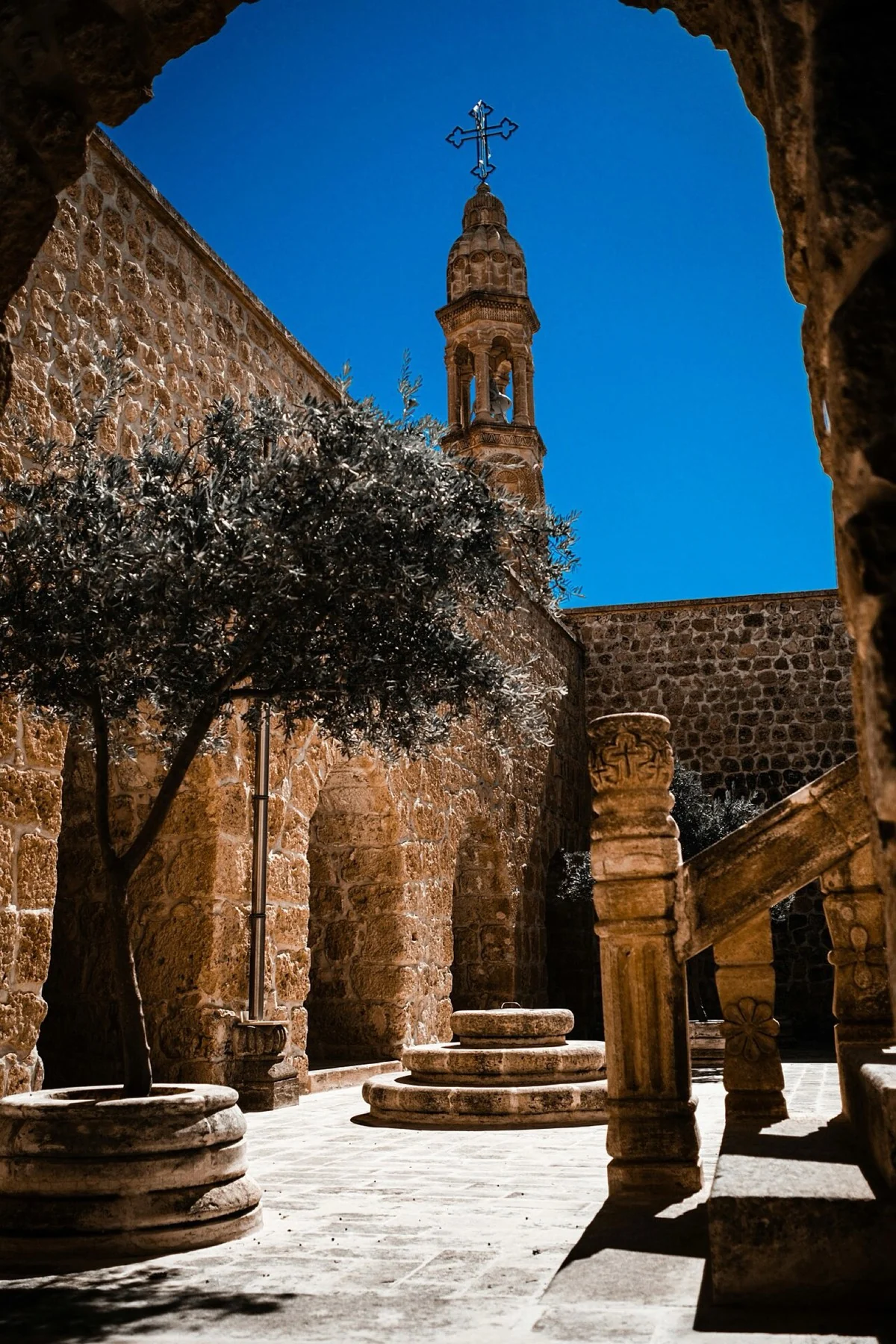
In the evening, a shared meal is laid out at the vineyard owner’s house. Those who have worked all day sit at the same table, and prayers are said for the year’s abundance. In the Syriac tradition, the grape also has a place in the church’s liturgy as a sacred fruit, so the vineyard and the harvest are treated with particular respect. These harvest meals are among the oldest expressions of neighbourliness and solidarity in Tur Abdin.
Many Syriac families have since scattered to Istanbul or to Europe, yet quite a few return to their villages at harvest time. For them, the vineyard is not just land; it is the vines their grandfathers planted, the late summers of their childhood and an identity in itself. The cauldrons lit again every year are the unextinguished fire of that memory.
Source: Ünal, M. S., Uçaş, C., Sezgin, H. (2020). “Midyat/Mardin İlçesinde Yöresel Üzüm Çeşitlerini Değerlendirilme Şekilleri” (Ways of using local grape varieties in the Midyat district of Mardin). Bahri Dağdaş Bitkisel Araştırma Dergisi, 9(2), 268–279.