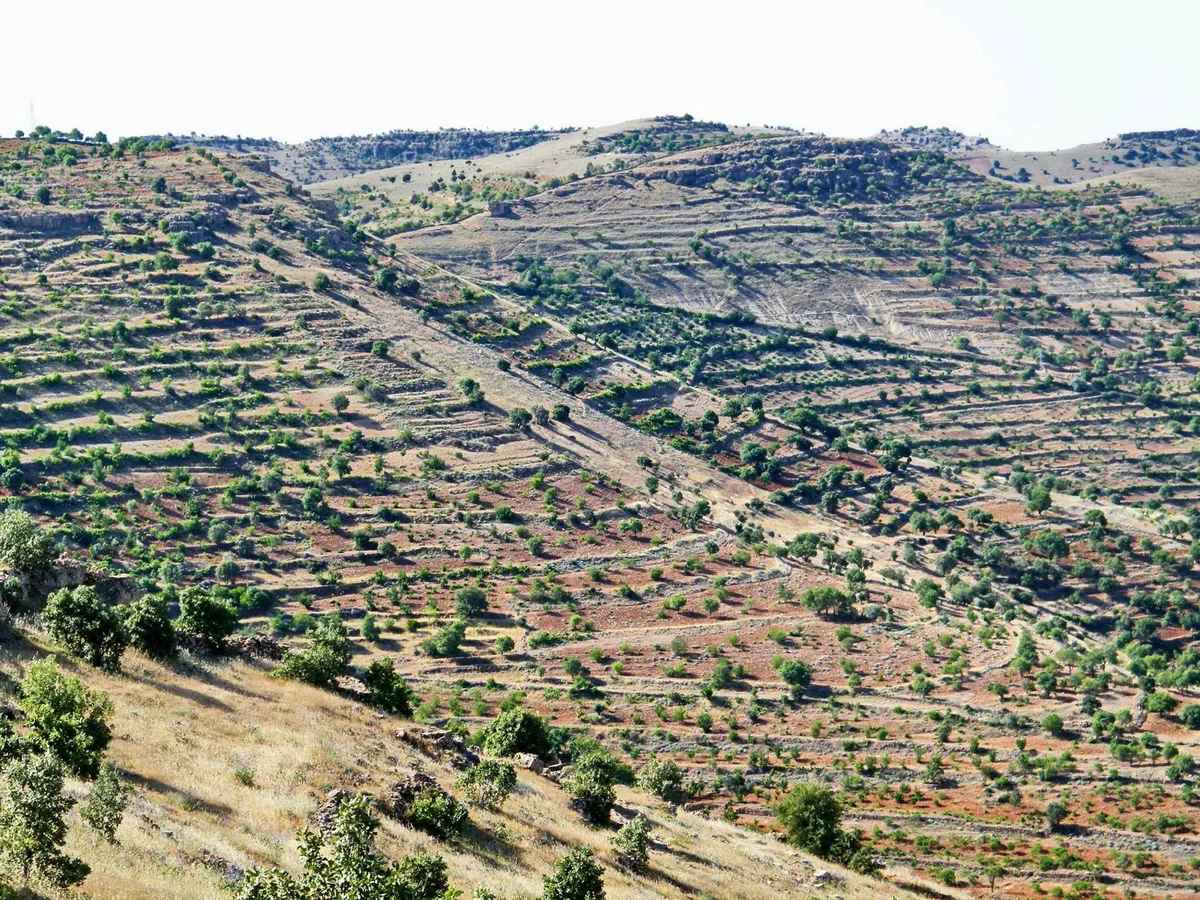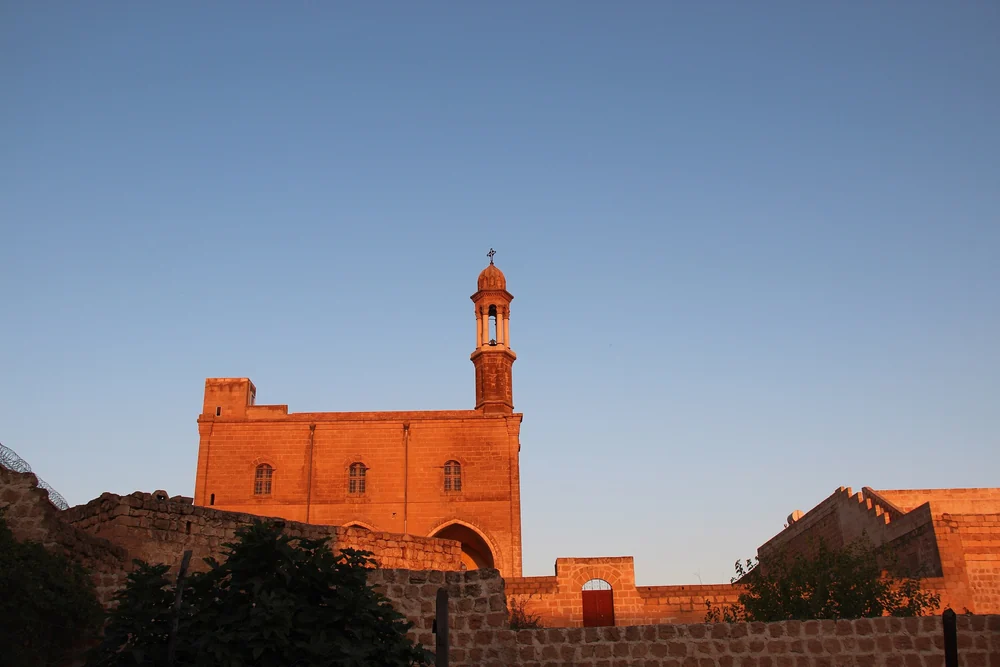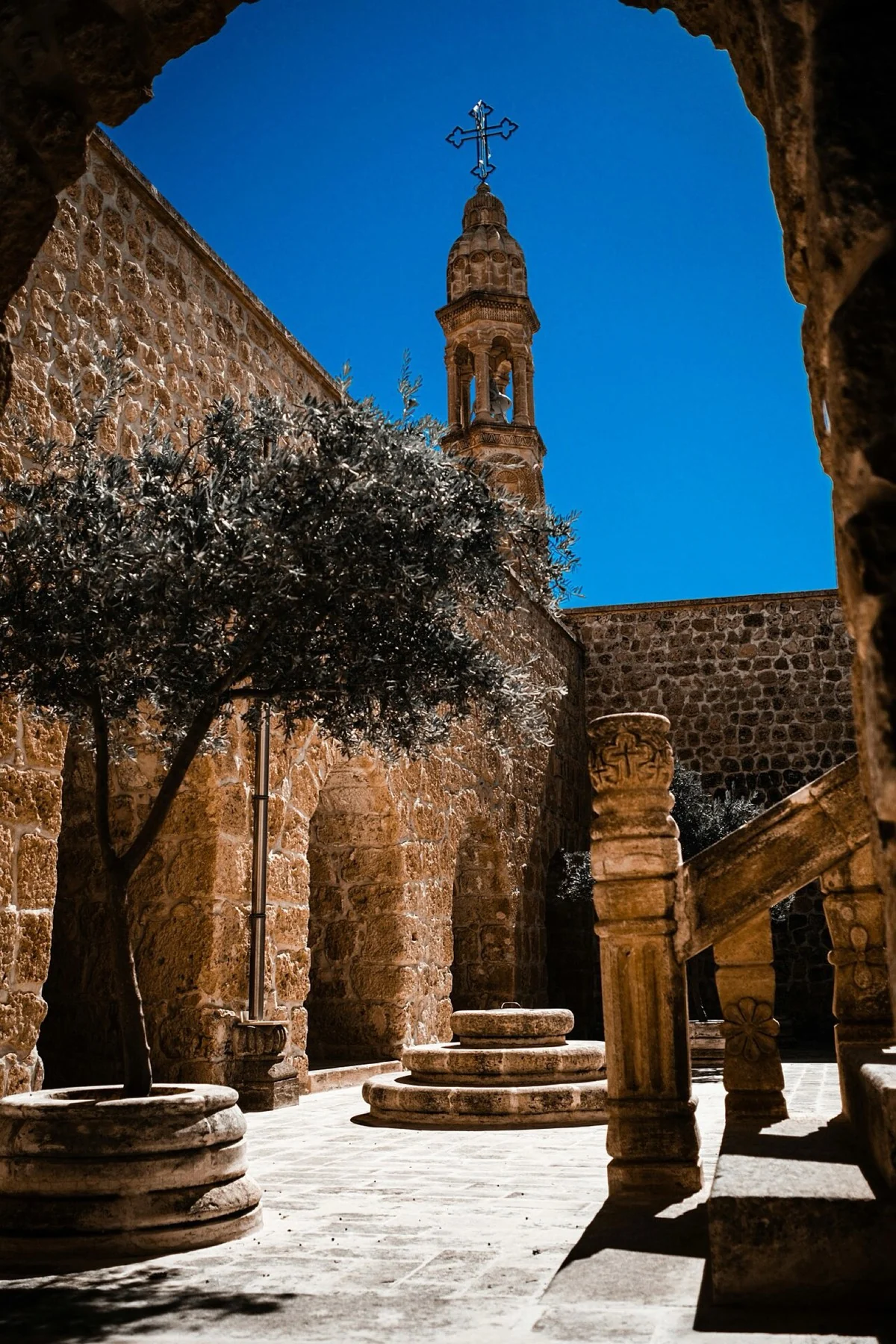
The road from Midyat heading south-east towards the village of Güngören winds between the stony hills of the Tur Abdin plateau. At one bend, walls of yellow limestone and bell towers come into view: Mor Gabriel Monastery. Standing in the same place for sixteen centuries, with worship continuing to this day, it is known as the oldest surviving Syriac Orthodox monastery in the world.
- Founded
- AD 397
- Founders
- Mor Shmuel, Mor Shem’un
- Main church
- 512
- Dome height
- 17 metres
A monastery founded by a teacher and his pupil
The monastery was founded in AD 397 by Mor Shmuel and his pupil Mor Shem’un. Syriac sources relate that it was built on the remains of an older temple. It soon became one of the spiritual centres of the region and received donations from the Roman emperors Arcadius, Honorius and Theodosius II, and later from the Byzantine emperor Anastasius I.
One of the names still used locally is Deyrulumur. The monastery takes its name from Mor Gabriel of Beth Qustan, who lived in the 7th century and was trained here. In his time, some eight hundred monks are said to have lived in the monastery – a number that shows it was not only a place of worship but a busy centre of learning and life.
The heart of Tur Abdin
In Syriac, Tur Abdin means “the mountain of the servants of God”. The name comes from the monasteries and monastic communities that filled the region over the centuries. Mor Gabriel was the largest and most important of them: between 615 and 1049 it was the seat of the bishopric of Tur Abdin, and in the following centuries it continued to have a diocese of its own.
The monastery’s history is not one of uninterrupted peace. Many armies passed through the region, and the hard times left their marks on the buildings. Yet each time the monastery was repaired, filled with life again and survived to the present day. This resilience has made Mor Gabriel, for the Syriac community, less a building than a symbol of memory and continuity.
For sixteen centuries it was damaged, repaired and filled with life again – but never abandoned.
Vines on a gold ground
The main church of the monastery was built in 512 by the Byzantine emperor Anastasius I. The mosaics decorating its sanctuary are counted among the most precious examples to have survived from Late Antiquity. On the gold ground of the vault, vine branches rise from four silver vessels and intertwine; among the leaves are three medallions containing crosses.
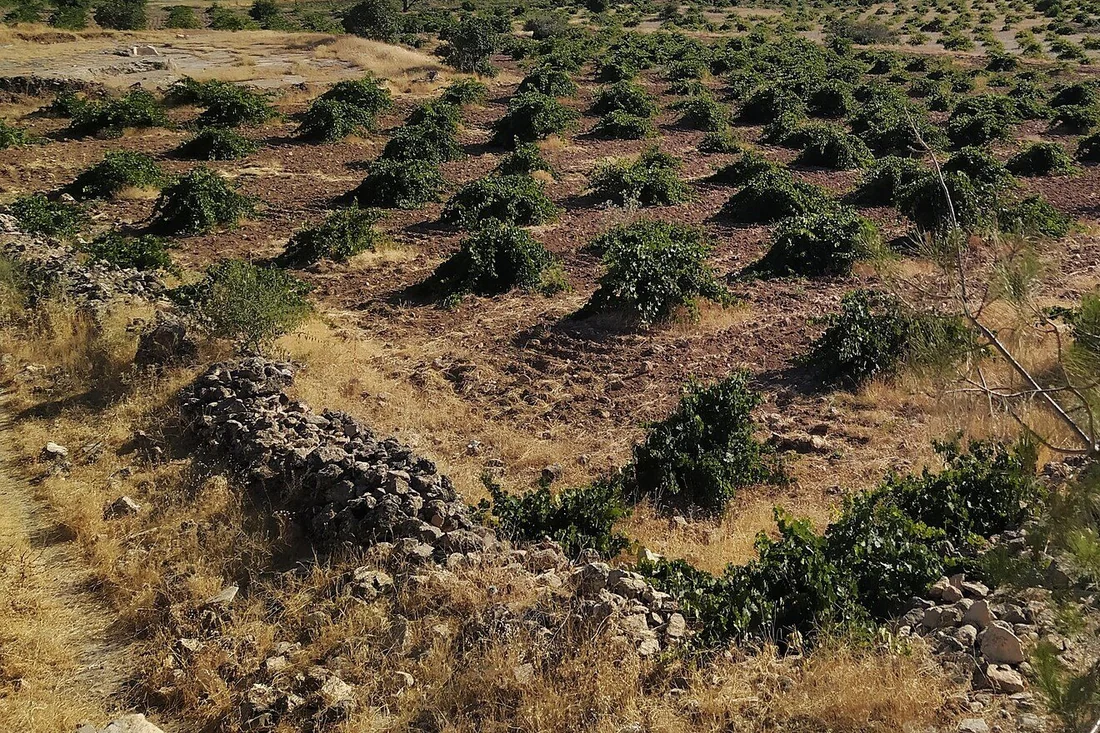
The vine motif here is no coincidence. The vine holds a place in the faith of Tur Abdin as much as in its soil; the vineyards on the slopes around the monastery and the golden vines on the church vault are like two faces of the same land.
Another famous part of the monastery is the dome dating from the early 6th century, traditionally associated with the name of Empress Theodora. About 17 metres high inside, with an inner diameter of 11.5 metres, the dome is built of radially laid bricks and rests on walls of cut stone. Fifteen hundred years old, it still bears witness to the engineering knowledge of its time.
Mor Gabriel today
Mor Gabriel is still a living monastery. As the seat of the Metropolitan of Tur Abdin, it is home to monks and nuns, prayers are sung in Syriac, and the tradition continues to be handed down from generation to generation. In 2021 it was added to UNESCO’s World Heritage Tentative List together with the Late Antique and medieval churches of the Tur Abdin region.
The monastery is open to visitors at set times. It is first and foremost a place of worship: wearing clothes that cover the shoulders and knees, keeping quiet and asking before taking photographs are the most natural ways to respect your hosts. Since visiting hours can change with the season, it is best to check before setting off.
Why it matters
Visitors to Mor Gabriel usually leave with the same feeling: that time flows differently here. Walking through the stone courtyards and seeing that a community founded sixteen centuries ago still speaks the same language, says the same prayers and works the same land is what best explains why Tur Abdin is called a “living heritage”.
Sources: Mor Gabriel Monastery, Wikipedia; Syriac Heritage Project, “Dayro d’Mor Gabriel”; A. G. Leventis Foundation, “Mosaic Decoration, Monastery of Mar Gabriel”; Gorgias Encyclopedic Dictionary of the Syriac Heritage, “Gabriel, Monastery of Mor”.