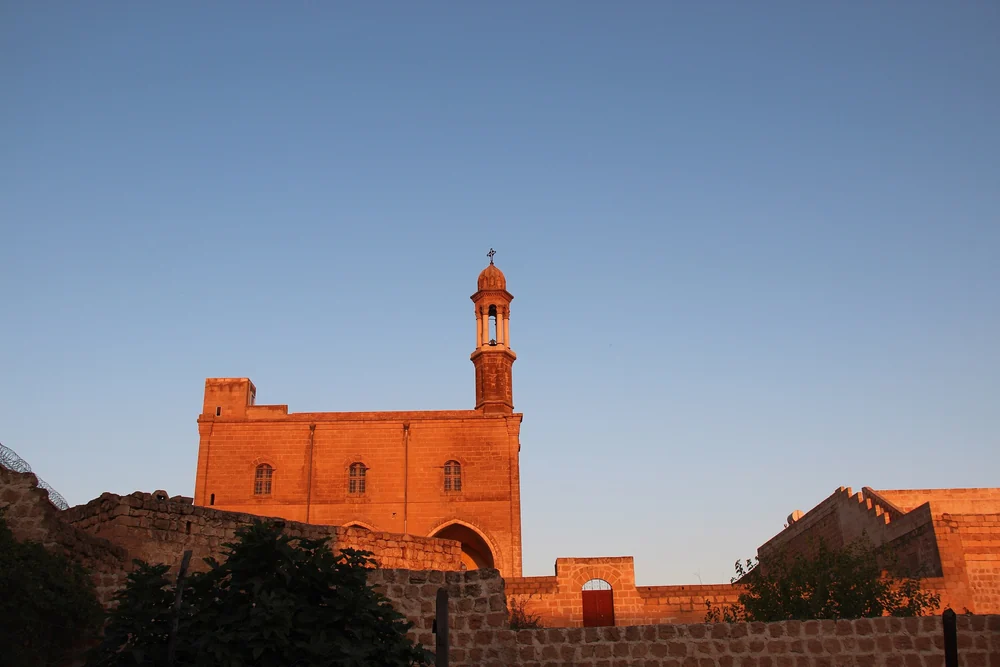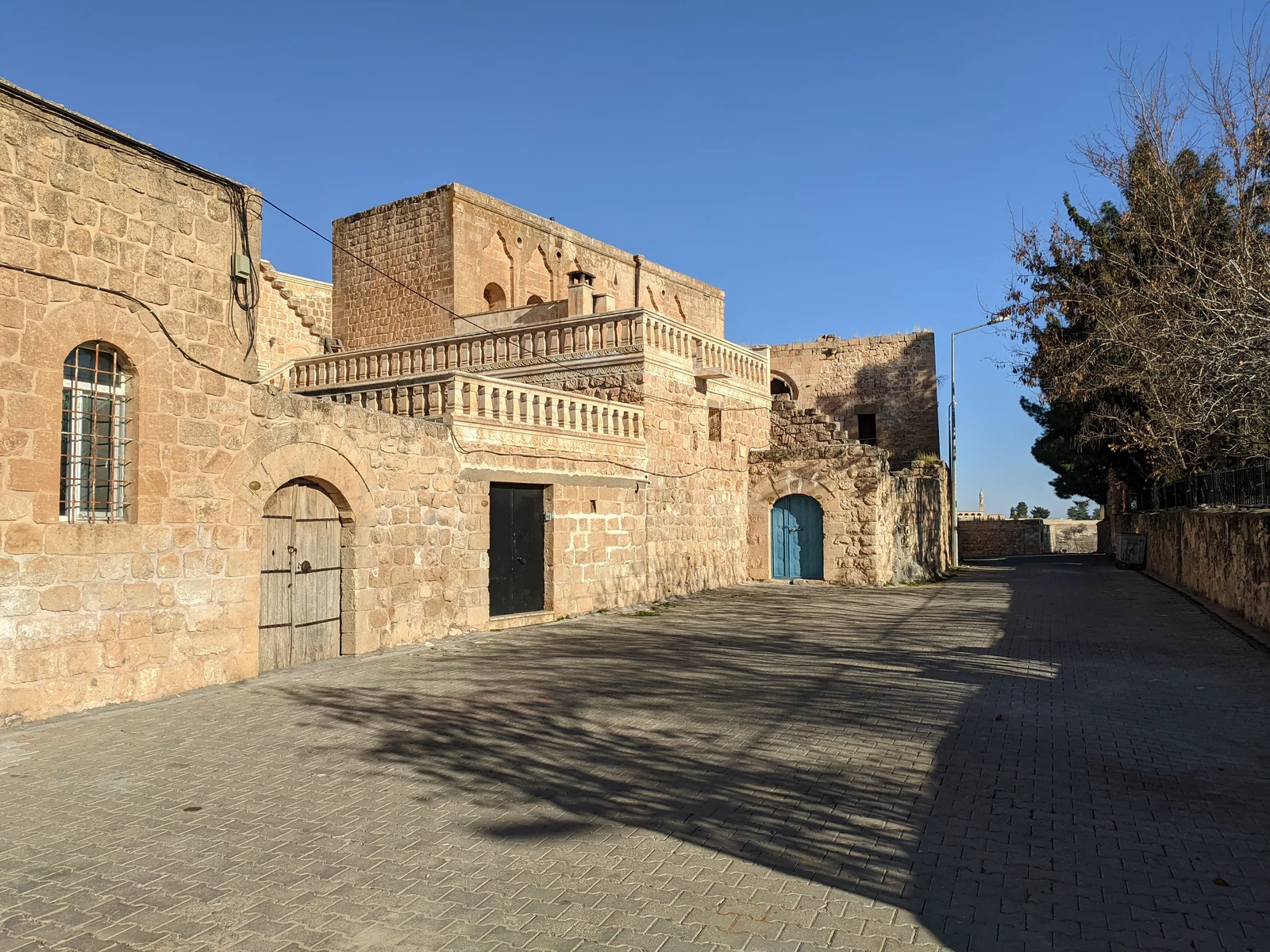
First-time visitors to Midyat are struck by the colour of the town. Houses, courtyard walls, arches and churches rise from the same yellow stone, and as the light changes through the day, so does the colour of the town: a pale cream in the morning, a bright yellow at noon and almost honey-coloured in the late afternoon. This stone is both Midyat’s building material and its identity.
- Material
- Yellow limestone
- Plan
- Inward-facing courtyard
- Storeys
- Usually 2–3
- Roofing
- Vaults and flat roofs
A stone that comes out soft and hardens with time
Midyat stone is a yellow limestone quarried locally. Its most remarkable property is that it is soft and easy to work when first taken from the quarry, and hardens over time as it is exposed to sun and water. This has given Midyat’s masters great freedom: while soft, the stone can be carved almost like wood, and once in place it lasts for centuries.
Thick stone walls offer natural protection against the region’s harsh climate. In the scorching summer heat the houses stay cool inside, and in winter the stone holds the warmth. The beauty of Midyat’s houses is thus also a clever answer to the climate.
Closed to the street, open within
The traditional Midyat house faces the street with plain, high walls. Real life takes place in the courtyard behind them. The rooms are arranged around the central courtyard, and it is the courtyard that sets the rhythm of the house. Most houses have two or three storeys, each with its own arrangement opening onto the courtyard.
The iwan, set between or in front of the rooms, is the best-loved space of the Midyat house. Closed on three sides and open to the courtyard on one, this semi-open space is used for sitting in the shade in summer, receiving guests and sleeping on cool nights. The flat roofs are part of the house too: on summer nights people sleep on the roofs, and in the harvest season grapes are dried there.
The Midyat house turns its back to the street and opens its whole heart to its courtyard.
Lace in stone
Because the stone is so easy to work, a highly developed art of decoration grew up in Midyat. Door and window surrounds, columns, arches and balustrades were carved by masters with motifs as fine as embroidery. Plant scrolls, geometric patterns, stars and rosettes turn the façades into stone lace.
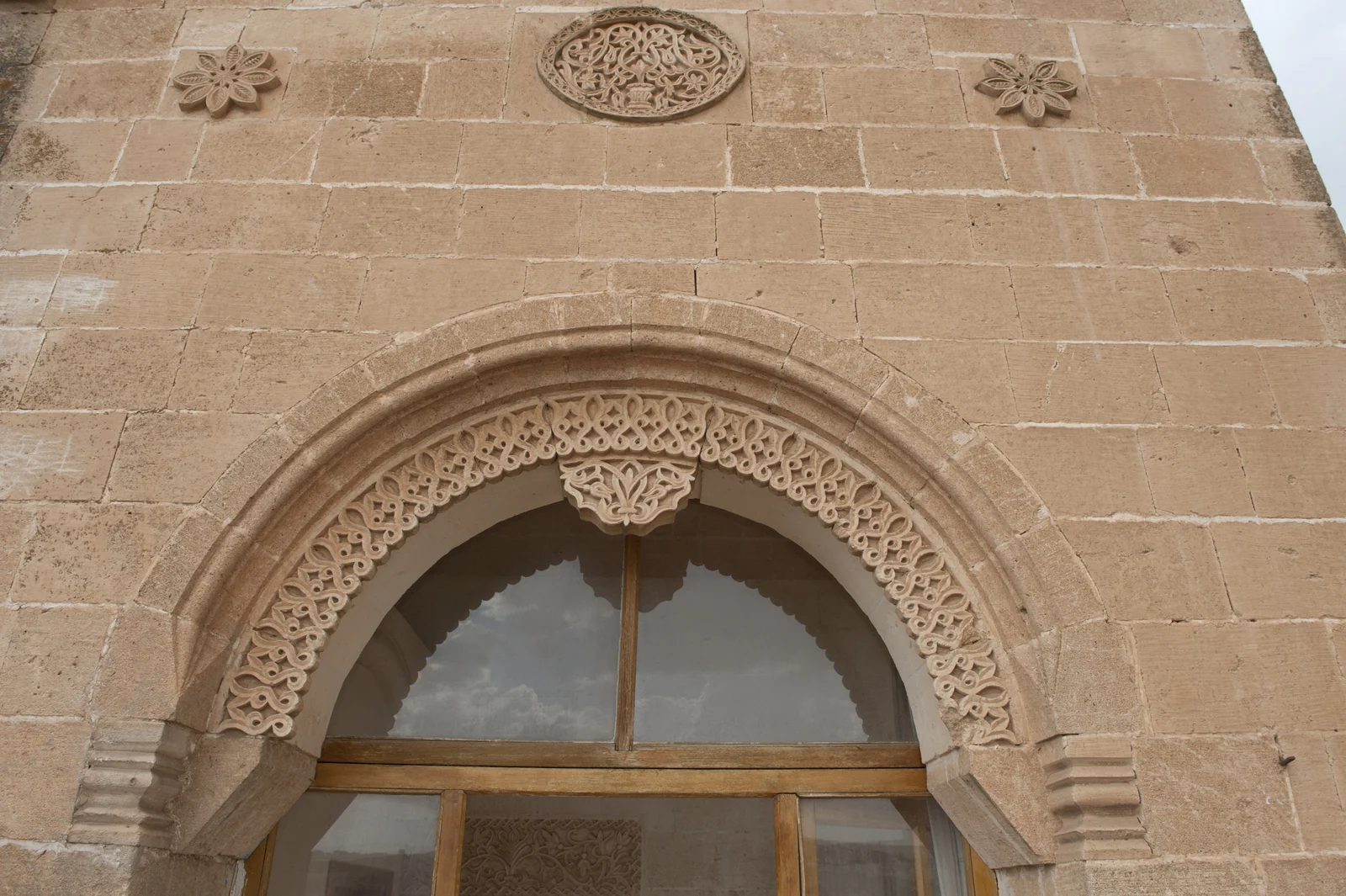
The same skill can be seen in the roofing. Thanks to the workability of the stone, rooms are covered with vaults: barrel vaults, cross vaults and cloister vaults are common in Midyat houses. Seen from inside, these vaults give the rooms both height and a calm sense of space.
A town of masters
Midyat’s stone architecture is the product of a tradition of craftsmanship passed down through generations. The masters who quarried, cut, shaped and carved the stone were often trained within the same families. Their skill shows not only in houses but also in churches, mansions, caravanserais and bazaars.
One of the best-known examples of this tradition is the Midyat Guesthouse (Konuk Evi), on one of the high points of the town. Its oldest floor dates from 1850, and later additions brought it to four storeys. With its courtyard, carved façades and the view of the town from its roof, it is today one of Midyat’s most visited buildings and has served as a set for many television series.
What to look for in Midyat
To see Midyat’s stone architecture, it is enough to walk the narrow streets of the old Syriac quarter. The Guesthouse, historic churches such as Mor Barsawmo and the han buildings of Estel show different faces of this architecture. As you walk, remember to look up at the window surrounds, the door arches and the edges of the roofs: Midyat’s real treasure is often hidden in these details.
Sources: “Geleneksel Midyat Evlerinde Cepheler” (Façades of traditional Midyat houses), Mimarlık journal; Midyat Stone Houses, Küre Encyclopedia; Midyat, Wikipedia.